Design process
at Dow Jones
UX Program Manager, Design Operations
At a glance
- Built a shared design process across brands
- Made the process visible to product, tech, and stakeholders
- Clarified each team’s deliverables to support faster delivery
I supported an effort with the Dow Jones Design Ops team to bring our product design teams across brands into a shared way of working.
Inside Product & Consumer Experience, teams needed to know how their work fit together and how they could best support each other. Our partners across the company needed clarity on when should they get involved, and what they were expect design to deliver.
- Customer Intelligence
- UX Research & Experimentation
- UX Architecture
- UX Design
- Special Projects
- Design Systems
Building the process with design leads
We asked leads across brands to map how their teams worked. Their input showed us which decisions and deliverables we could agree on across products. We then worked alongside the teams as they put the framework into practice.
Aligning
We agreed on goals within design first. Then we brought a brief to stakeholders so they could shape the objectives and sign off on the work.
Planning
I worked with each lead to understand scope, staffing, and expected deliverables, then brought all of those commitments together into one schedule for cross-team visibility and collaboration.
Executing
Weekly stand-ups, design reviews, and demos kept product partners aware and involved. I maintained program portals so teams could find deliverables and track deadlines between meetings.
Iterating
We tested process updates in real time, had conversations around what was working and what need to change. We iterated on the new frameworks as we moved through.
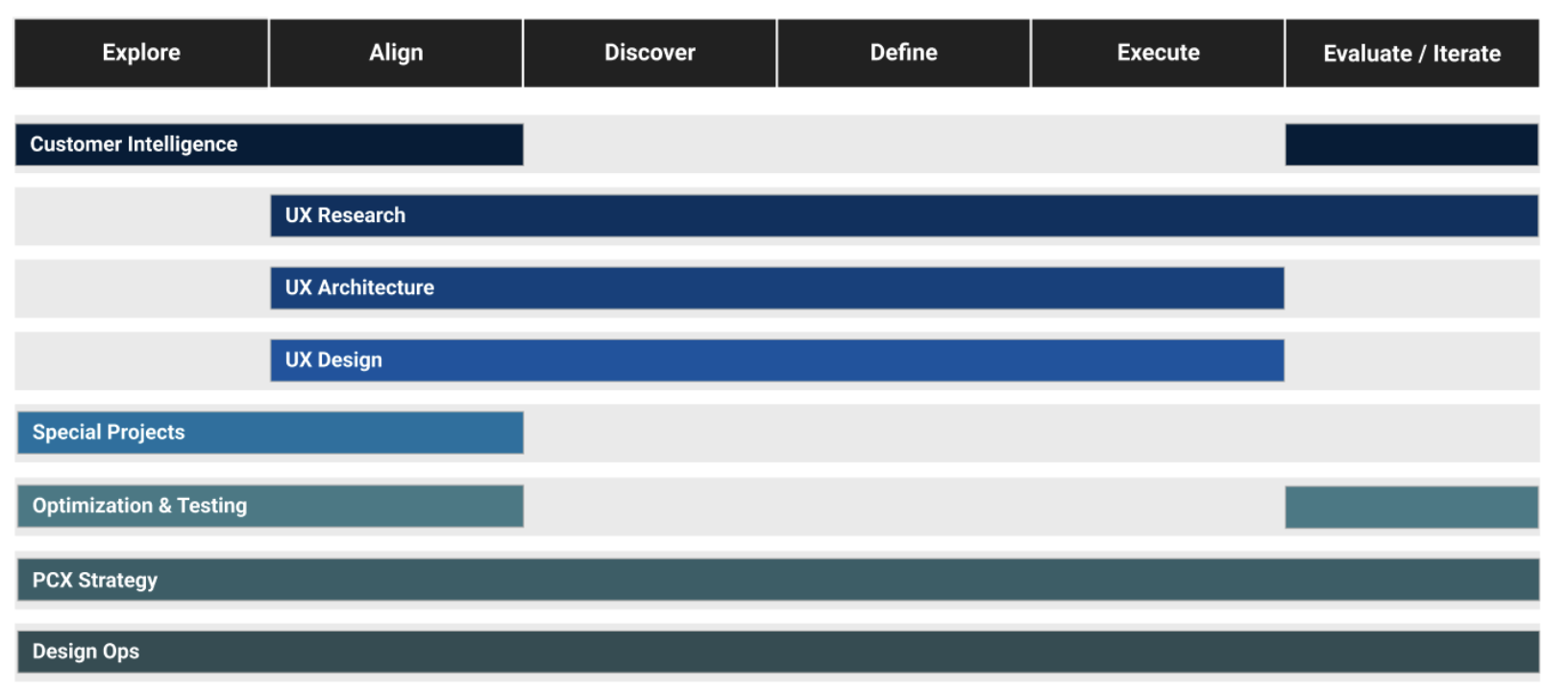
We charted every deliverable across every team, discipline, and brand, then distilled that detail into this map. Teams worked together throughout the design process. The colored bands show where each team provided most of its support and produced its main deliverables.
What changed
- Faster delivery times for cross-brand initiatives
- Ease of onboarding for internal teams & new hires
- Increased communication with product and technology
- Enhanced clarity in stakeholder communications
What I learned
The most challenging aspect of this initiative was bringing input from so many leads into one plan while making sure it still worked for each team. Some leads were apprehensive when we first shared our goals, and that was fair. Consistent, transparent communication helped us understand their concerns and avoid pushing too much change too quickly.
We’d share an open question early, even when the plan was incomplete. Once people understood the larger goal, they could use their own judgment to help shape how the work unfolded. I had to be willing to revise the plan when someone showed me what I’d missed. That took empathy and an awareness of what each change meant for the people doing the work.