Design Ops
at BBC
Design Operations Manager
At a glance
- Built cohesive operations from scratch for a design team across time zones
- Defined a five-phase design process from the first brief through design QA
- Supported team growth, shared processes, and program delivery.
At BBC Studios, our Creative Product team designed digital experiences for BBC.com and international news, and streaming experiences for audiences outside the UK. We worked across London and New York. My job was to make it easier for the team to do great work together.
I built a shared design process so that designers and their partners in product and engineering knew what to expect from one another. From the first brief through delivery, we had a way to agree on the problem, explore and test ideas, and carry our decisions through to the experience we put in front of audiences.
Turning a request into a brief
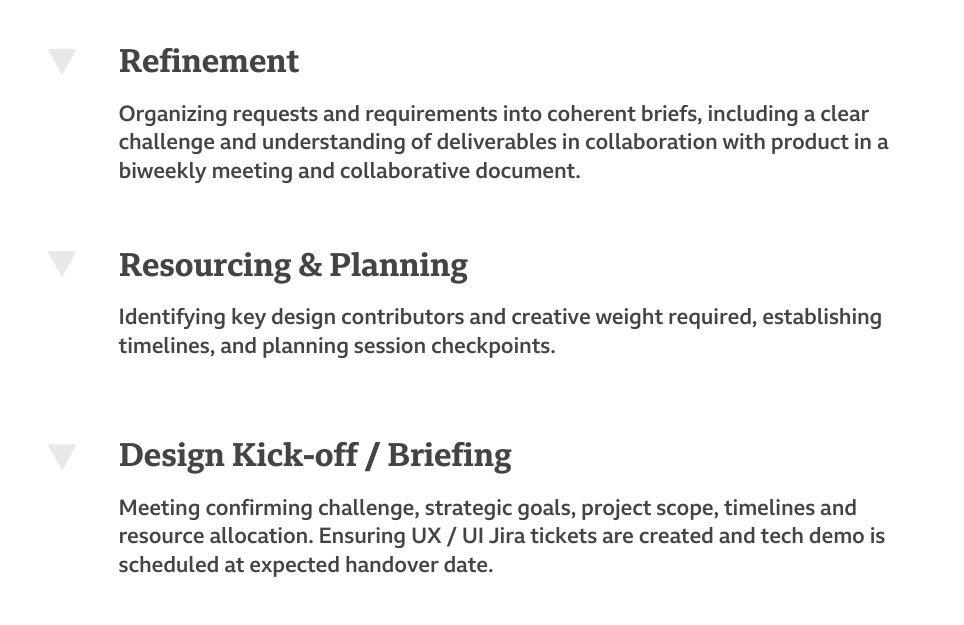
I started with how work reached the team. A request often named something to build. Before assigning a designer, we needed to understand what a reader, viewer, or listener was trying to do. We gave ourselves one week to define the work and one to assign it.
In refinement, we wrote down the challenge, the user’s perspective, what a good result would look like, and how we’d measure it. Product, design, and engineering could then question the assumptions together. Once we agreed on priority and staffing, we moved the work from the backlog into Monday.com, where everyone could follow its progress.
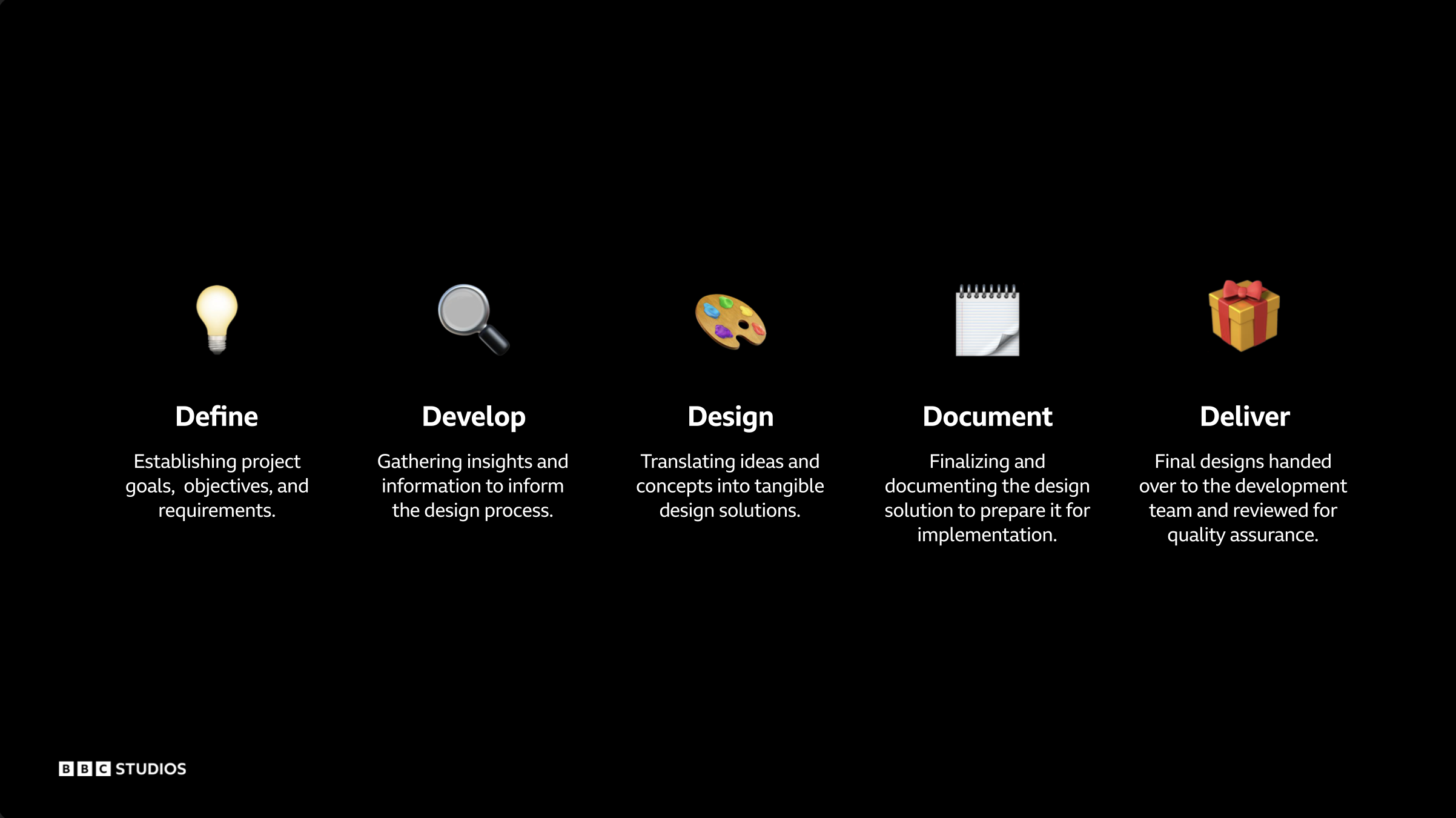
How work moved through the team
Define
Turn the request into a brief that design and its partners can agree on. What problem are we solving, for whom, and what do we need to deliver?
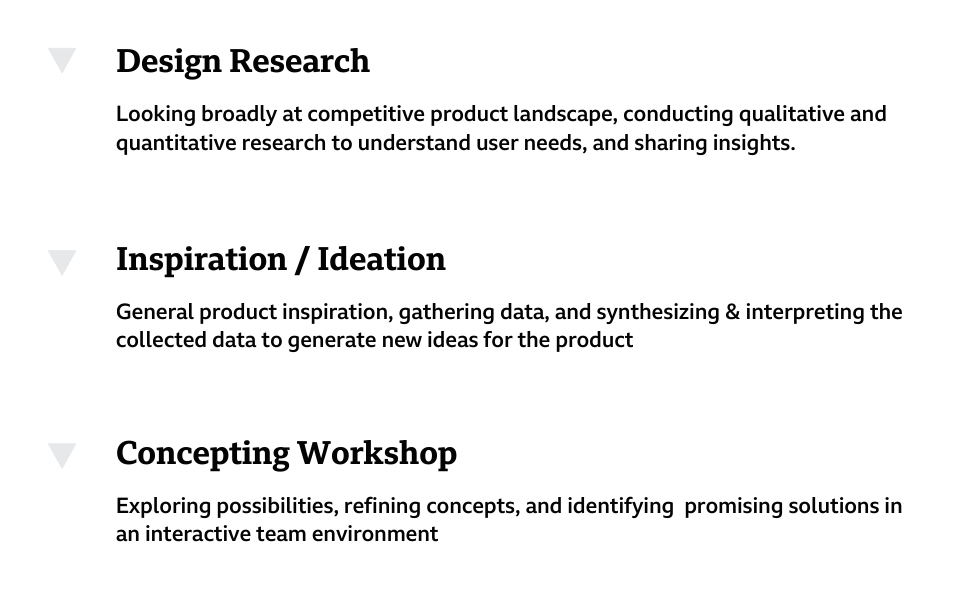
Discover
Bring the team together around scope, timing, and resources. Use research, competitor examples, and a concept workshop to explore possible directions.
Design
Test flows and wireframes with users. Review the experience with design, strategy, and product before working through the interface, down to its components and motion.
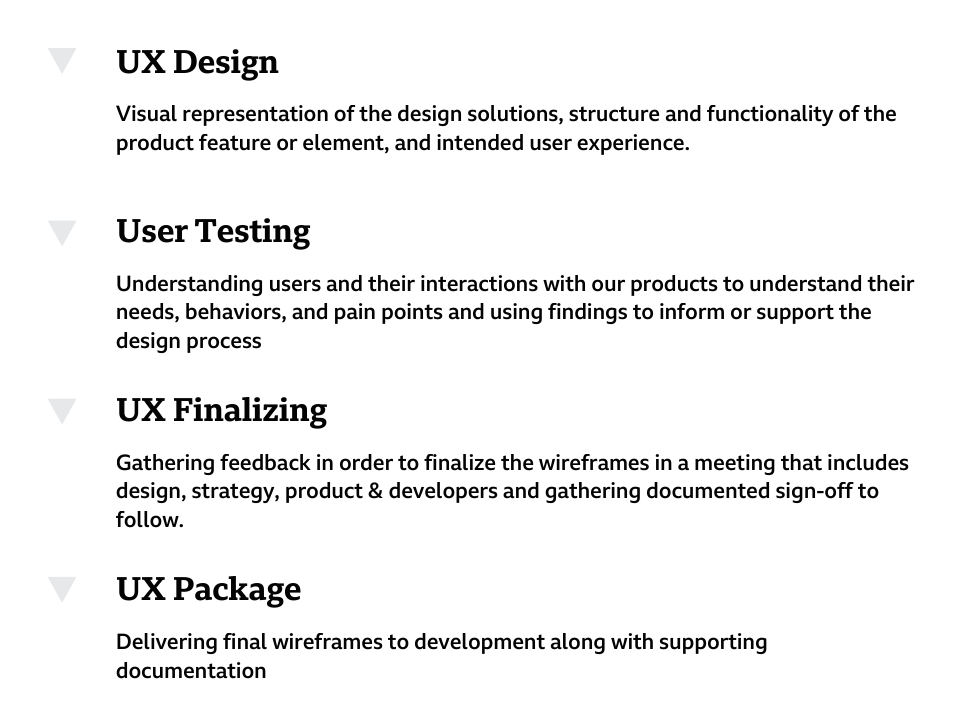
UX design 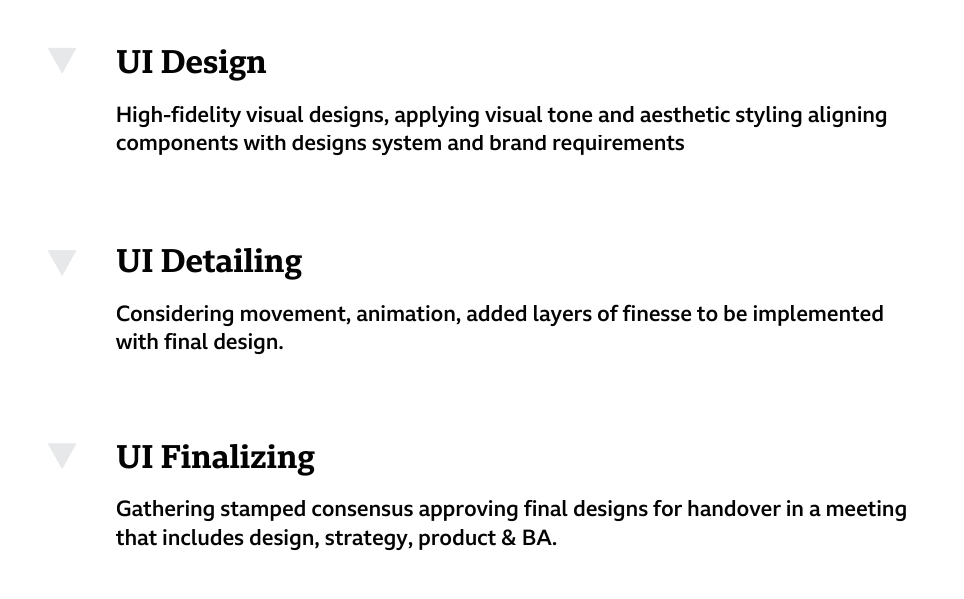
UI design Document
Give engineering the specifications, assets, and breakpoints in Figma, alongside a prototype that shows how the experience should behave.
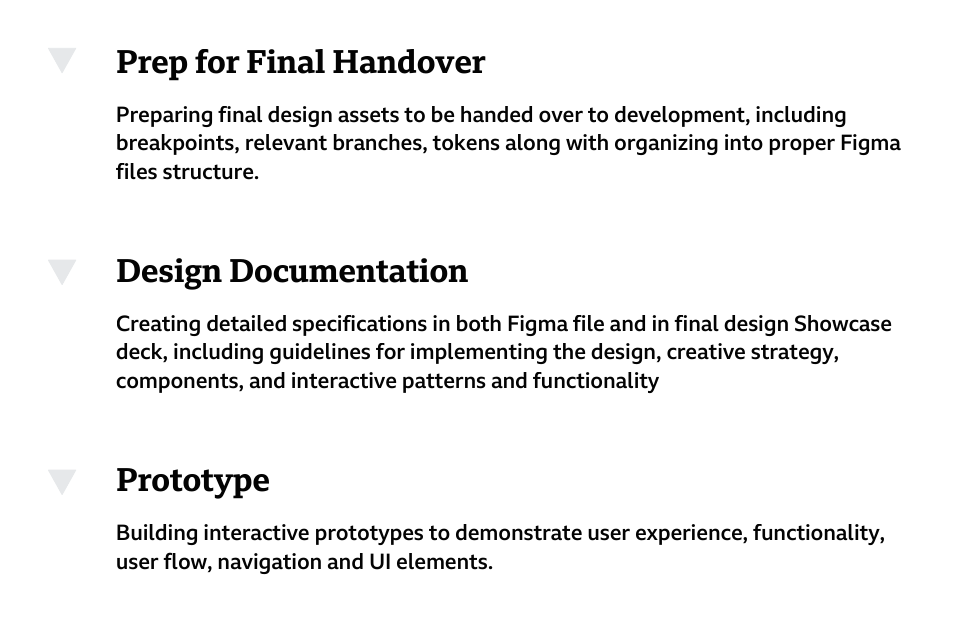
Deliver
Bring the designer back to review the implementation. Check it against the agreed design and capture what needs testing or another iteration after launch.
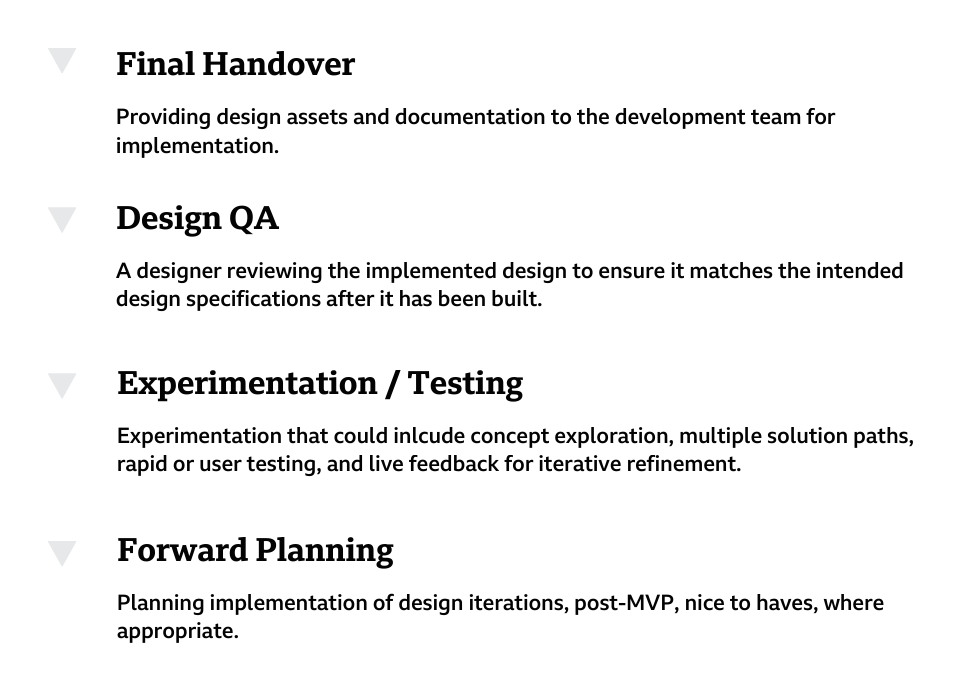
We built our day-to-day work around those five phases. We color-coded project status in Monday.com and used the same colors in our presentation decks, so someone looking at a design could see where it stood and what kind of feedback would help. Every Friday, we shared a project update so that cross-functional teams could celebrate accomplishments and share visibility on what was coming next.
Opening up work in progress
We needed to bring developers into design conversations from the start, while we were still figuring out what to build. So we created Creative Workspace, a standing invitation for the wider team to look at unfinished work every Monday and Thursday. A designer could bring an early navigation question on Monday, talk it through with developers, and return on Thursday with a prototype.
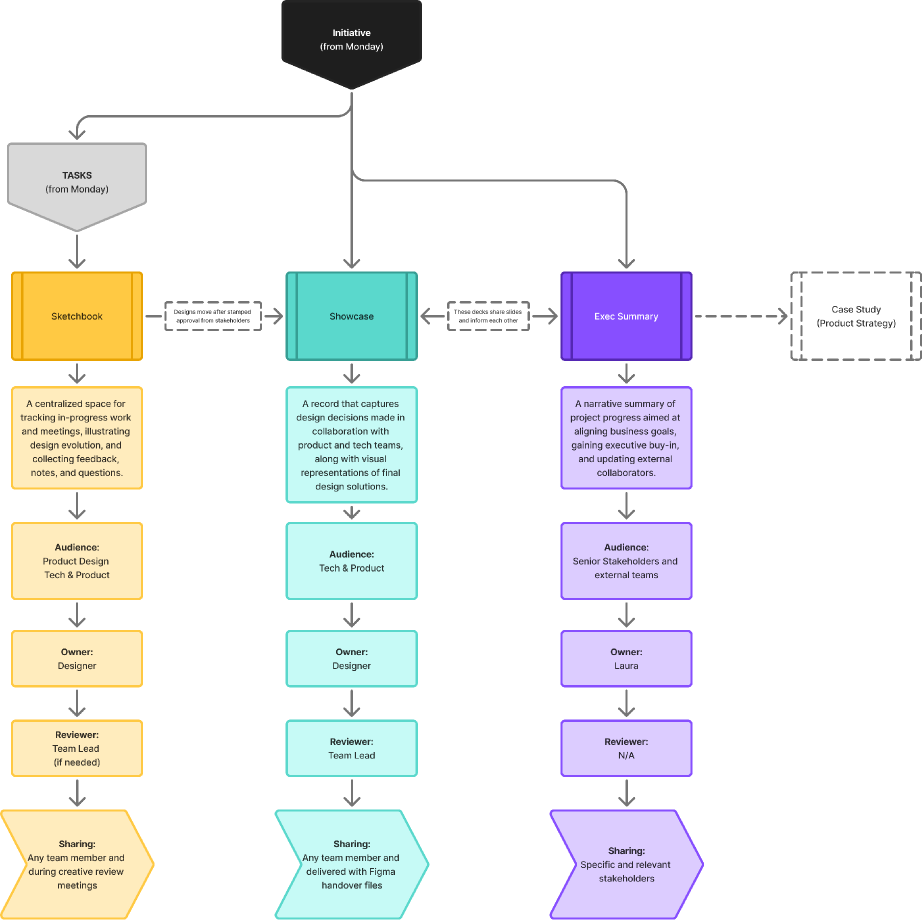
We introduced two decks in Figma Slides. Sketchbook was a running record of every iteration shared in Creative Workspace, including the questions designers were still working through. Anyone could open it between sessions and pick up the thread. Once design, product, technology, business analysis, and strategy were aligned, stakeholders stamped the decision live in Sketchbook. We marked the work as ready and moved it into Showcase, where everyone could find the completed designs in Figma alongside the rationale and documentation.
Our shared design principles guided those decisions. Could someone follow a story as they moved from the website to an app? Did the interface give the journalism room to lead? We used analytics to see how people used the product, research and feedback to understand why, and A/B tests to measure the effect of our changes.
We also created UX packages and Final Design packages. When the UX was ready, developers could use it to start building the scaffolding while designers finished the UI detailing. For leaders and external partners, a short Executive Summary covered what had moved forward, how it supported the business goal, and where we needed their support. We created templates for each deck so updates were quick to prepare and easy to scan.
Making room for the people doing the work
Skills mapping helped us see what each designer brought to the team. Looking across research, UX, UI, tools, presentation, and content strategy made it easier to talk about strengths and where people wanted to grow. Our Creative Curriculum gave that learning a place on the calendar through workshops, guest speakers, and sessions led by teammates.
I also built an onboarding guide for our hybrid team, from getting ready for the first day to setting goals with a manager. Team Tea gave us time to get to know each other. And when a promising idea fell outside the scope of a release, designers could save it in the Creative Wishlist to revisit later.
What changed
- Partners could review designs while decisions were still open.
- Designers and their partners had clarity on priorities and project status.
- Designers and engineers could trace a handoff back to its decisions.
- The team had a shared view of its skills and development opportunities.
What I learned
At BBC Studios, I learned to pay closer attention to when we invited people into a design conversation. In Creative Workspace, a developer could talk through an open question with a designer while there was still time to try a different approach. Creative Workspace eventually became Squadspace, where people across disciplines shared work in progress. That gave design a regular place in conversations about how the whole product was taking shape.
From the start, we revisited the process many times, drawing on what we saw in practice and what teammates told us. By November 2026, for example, we were looking at whether quarterly planning and our weekly Creative Stand-up could cover what the team needed from Sprint Planning. I learned that when we listened closely to what the design team needed, we could better support our cross-functional partners, too. We kept asking questions and stayed flexible enough to change how we worked together as those needs evolved.